
Fabric Structures vs. Permanent Buildings: When Does Each Make Sense?
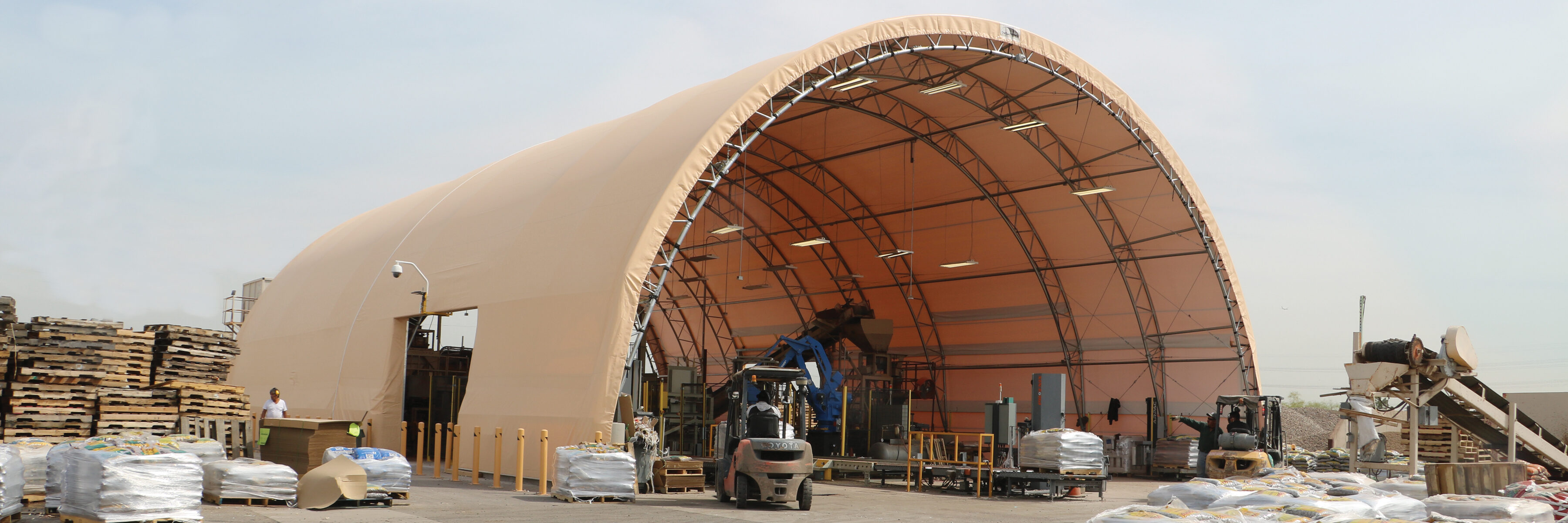
When industrial operations need to add capacity, the building decision often comes down to a false choice: a fabric structure for speed, or a traditional permanent building for staying power. In reality, that trade-off doesn’t have to exist. ClearSpan’s fabric structures are designed to serve as long-term, permanent facilities, while still delivering the fast permitting, installation and site-readiness advantages that make them the go-to solution for rapid industrial expansion.
We commonly field questions about fabric structures versus traditional, permanent buildings, including:
- What makes fabric structures attractive for fast industrial capacity increases?
- What leads industrial sites to prefer fabric structures over permanent buildings?
- What are the advantages of tensioned fabric buildings for industrial use?
While fabric structures are often used as permanent structures, they offer unique advantages, because of their ease of construction, durability and potential energy savings.
Sign Up Now To Learn More
Ease of Construction
One of the biggest reasons industrial operators turn to fabric structures is how quickly they can go from decision to functioning building. Because these structures use prefabricated components and a lightweight steel frame, they can be erected in a fraction of the time a conventional building requires — some projects go from ground to fully assembled in a matter of days.
That speed starts with the foundation. ClearSpan's Helical Anchoring System allows buildings to be constructed on almost any site by drilling anchors directly into the ground, which eliminates the need for poured concrete and dramatically cuts down on excavation and site work. This keeps site prep minimal and lets crews get started even on lots that would otherwise require extensive grading or groundwork. And despite the fast, low-disruption installation, helical anchors provide the strength and dependability of a permanent foundation — a structure can sit on them for as long as it's needed, or be relocated later if requirements change.
For operations that need other foundation types, ClearSpan also offers poured concrete, concrete blocks, pony walls, piers, concrete pads and even container-mounted options, all designed to satisfy structural inspections and meet local building codes. Whether a site calls for a fast, minimal-footprint anchor system or a more traditional foundation, ClearSpan can match the foundation to the project's timeline and permanence needs — which is exactly what allows a fabric structure to serve as either a rapid short-term expansion or a lasting industrial facility.
Durability
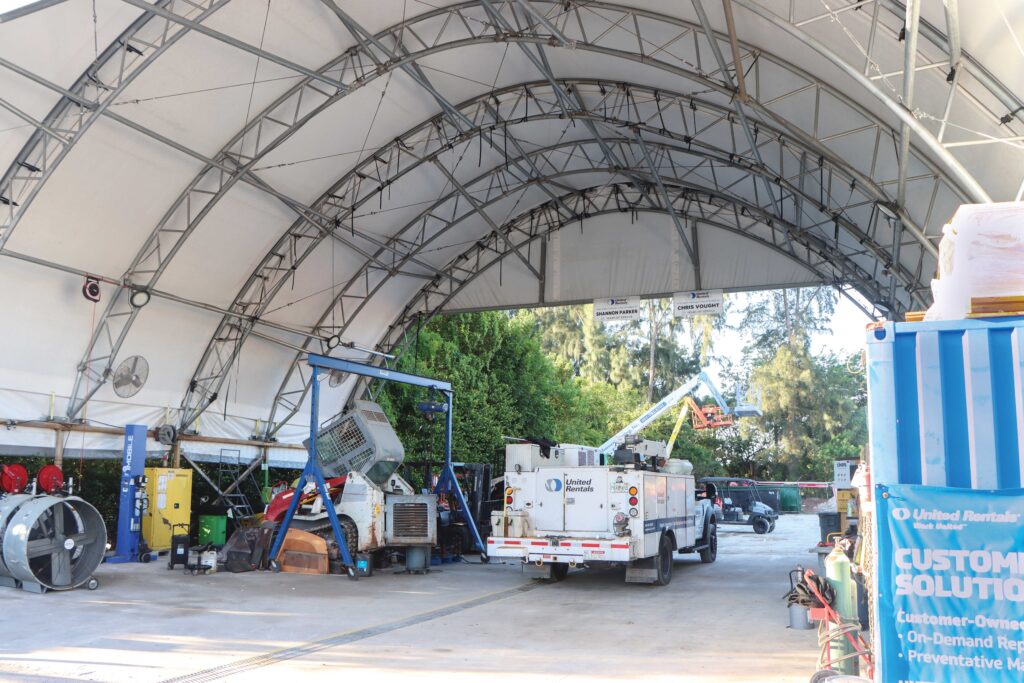
Speed of construction means little if the resulting building can't hold up to industrial demands. ClearSpan structures are built around two frame options — open-web steel truss and I-beam — both manufactured from corrosion-resistant steel that withstands caustic environments and is backed by an industry-leading 50 year warranty.
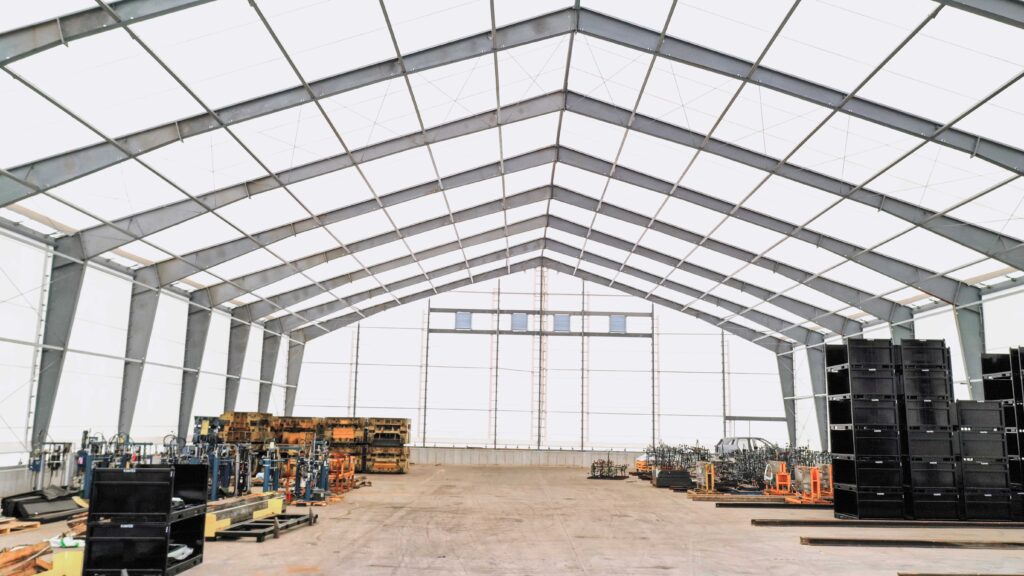
Truss frames eliminate the need for interior support posts, opening up the full interior for equipment, storage and material handling, while I-beam frames are built for applications that call for maximum strength and heavier point loads. The I-beam frames allow customers to obtain a massive building that can be built to any scale and any industrial need.
The fabric cladding itself is engineered for industrial-grade punishment. The standard 12.5 oz. polyethylene cover uses a rip-stop weave designed to stop tears from spreading, while ClearSpan's exclusive Armor Shield Cover — an architectural-grade fabric with multiple reinforcing layers — is built for harsher environments and backed by a warranty of up to 30 years. Together, these frame and cladding options are built to handle heavy snow loads, high winds and corrosive materials, like sand, salt and other bulk commodities, giving industrial buyers a structure that performs like a permanent facility because it's built to last like one.
Operational Savings
Beyond construction speed and structural durability, fabric buildings offer ongoing savings that compound over the life of the structure. The same translucent fabric cladding that provides strength also lets natural light flood the interior, reducing dependence on artificial lighting and helping lower electricity costs — a built-in efficiency that traditional opaque buildings don't offer.
Those savings extend to long-term ownership as well. Because the steel frame resists corrosion and the fabric cover is designed to shed wear, maintenance needs stay low over a building's lifespan, and repairs are typically fast and inexpensive compared to conventional construction. Combined with the reduced site work and foundation costs made possible by systems, like ClearSpan's helical anchors, fabric structures give industrial operators a lower total cost of ownership — without sacrificing the long-term permanence their operations require.
The bottom line: fabric structures don't have to be a temporary stopgap on the way to a "real" building. With the right frame, cladding and foundation, a ClearSpan fabric structure can be the permanent facility — delivered with the speed and reduced site prep that fast-moving industrial expansion demands.
Whether you need a temporary or permanent facility, ClearSpan fabric structures offer an ideal solution. Call or Request a Quote today.
Related Articles
Why More Businesses Are Investing In Permanent Tent Structures
As businesses continue looking for faster, more flexible ways to expand their operations, permanent tent structures have become a popular alternative to conventional construction.
Prefab Buildings: Why Operations Are Going With A Prefab Structure
Prefab buildings have emerged as a major player in the building market, offering businesses increased versatility and a variety of other unique benefits.
Choosing A Building Supplier: Building Manufacturer Guide
A growing demand for prefabricated and pre-engineered building solutions has created a crowded market, making it harder to identify which building manufacturer is the right fit.
5 Myths About Fabric Buildings
Familiar myths prevent many consumers from gaining a full understanding of what fabric structures are capable of.