
Fabric Structures: An Ideal Salt Shed Solution
Before winter hits, municipalities and DOT’s in snowy regions have to prepare for the change in weather and the impending storms that come with it. For road travel to continue uninterrupted, cities and towns must be ready to assist the general public with an ample supply of road salt. However, road salt storage presents a unique set of challenges, and not just any salt shed will serve as an adequate storage space.
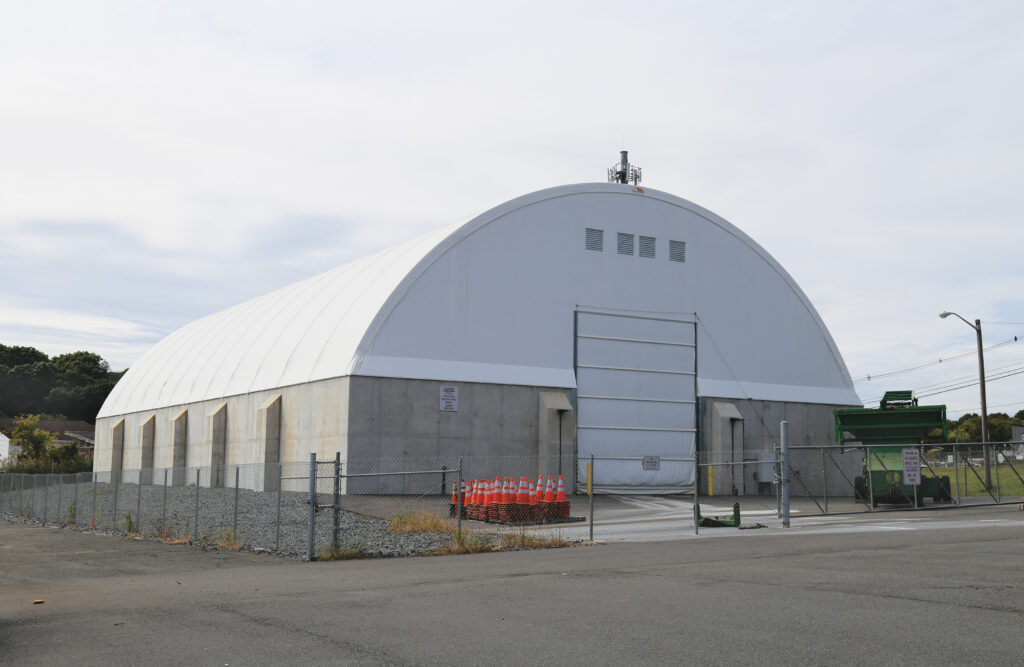
Fabric structures offer a unique and effective alternative to traditional salt sheds. For operations that are limited on space, suffer from poor ground conditions or just have an old unreliable structure, fabric buildings guarantee a suitable salt shed that can last well into the future. With a number of added advantages, municipalities can design the ideal salt shed for their operation, while reducing costs and maintenance needs and improving efficiency.
SUPERIOR SALT SHED ENVIRONMENT
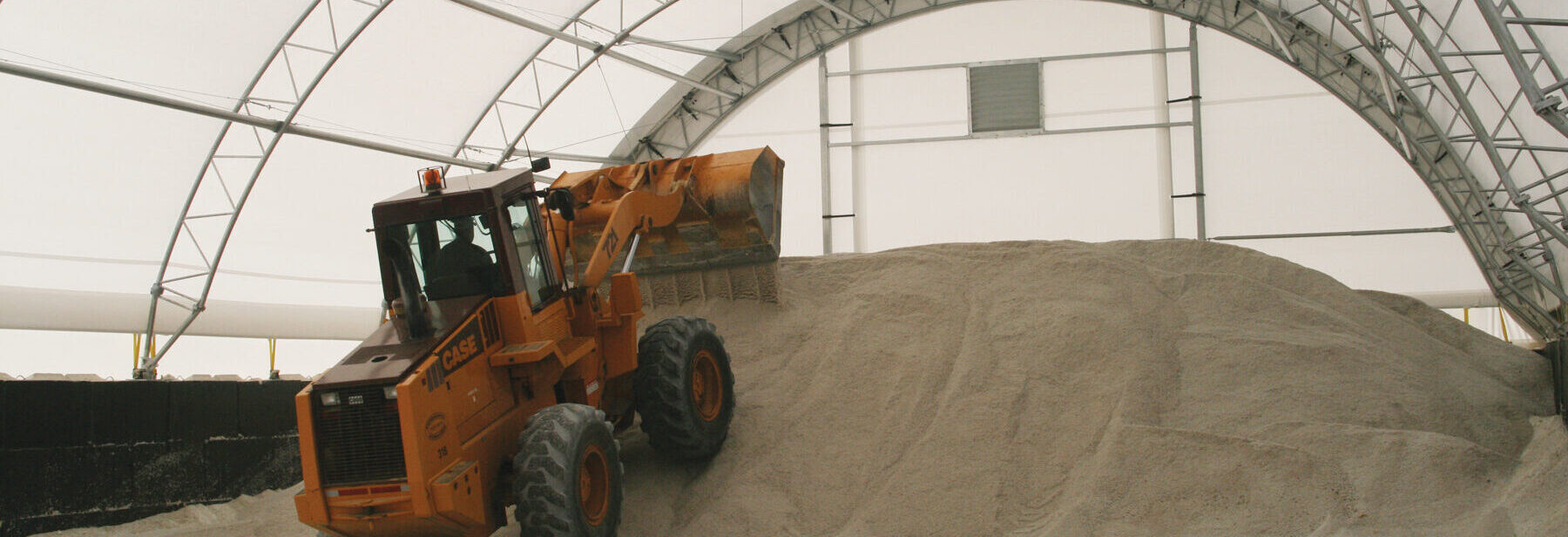
Municipalities require a space where they can store as much salt as possible and ensure bulk piles are protected from the weather. The expansive interiors of fabric salt sheds allow for larger quantities of salt to be stored at a time, which is helpful for municipalities that need to prepare for a number of storms during the winter.
The cover keeps rain and snow out and eliminates the possibility of losing salt volume. Unprotected salt piles lose a significant portion of their volume annually, which can cost operations money and leave them unprepared for winter storms. This makes it crucial for municipalities to find a storage solution that they can rely on year-round, and not just when the snow hits.
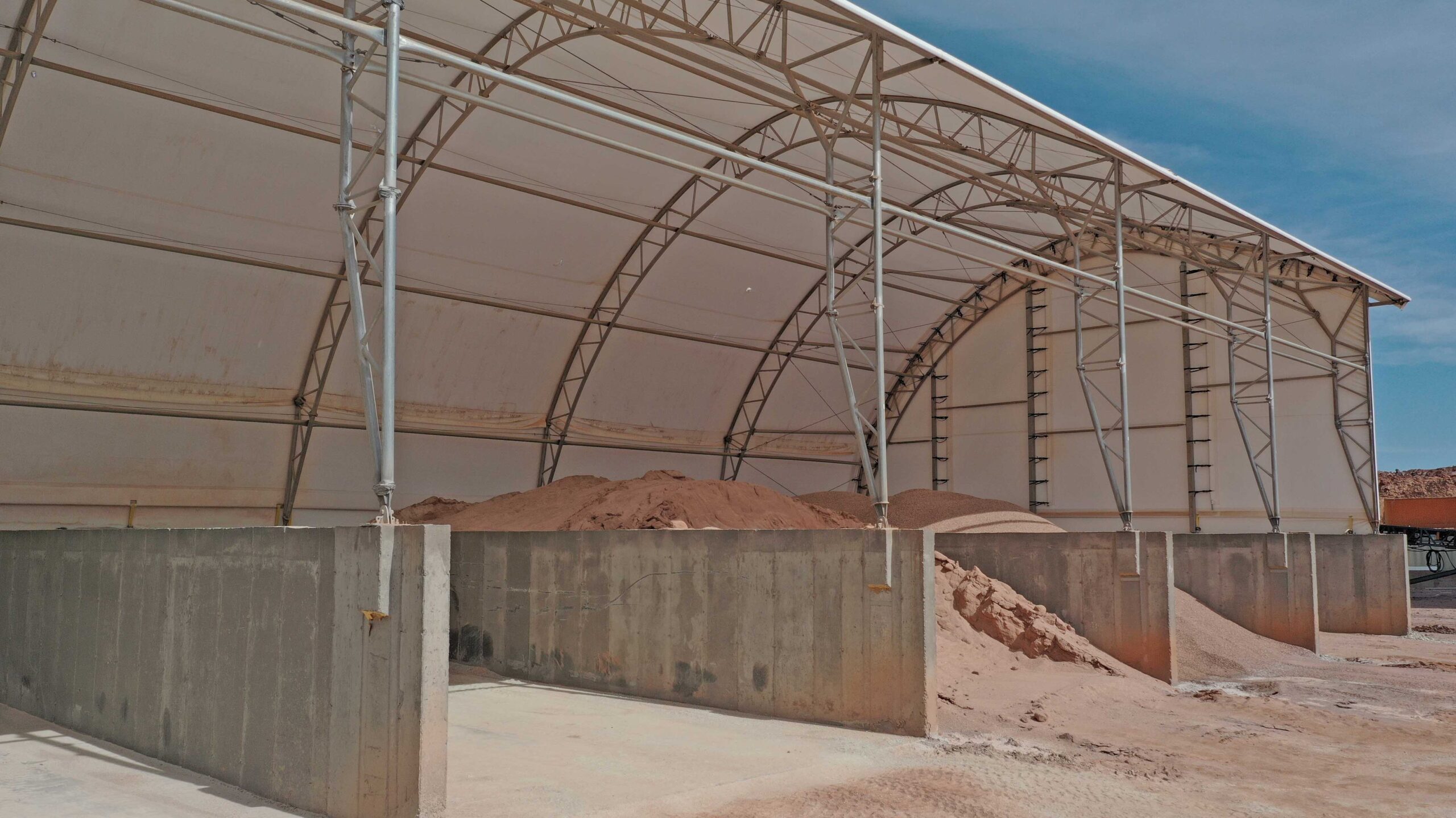
As a highly corrosive substance, salt requires a storage area that won’t break down easily. ClearSpan’s fabric salt sheds employ triple-galvanized framing, so they can withstand corrosive environments. Galvanization helps ensure the building remains durable over time, while additional building options can be incorporated to prevent the salt from ever touching the frame, like ClearSpan’s Pre-Stressed Concrete Walls.
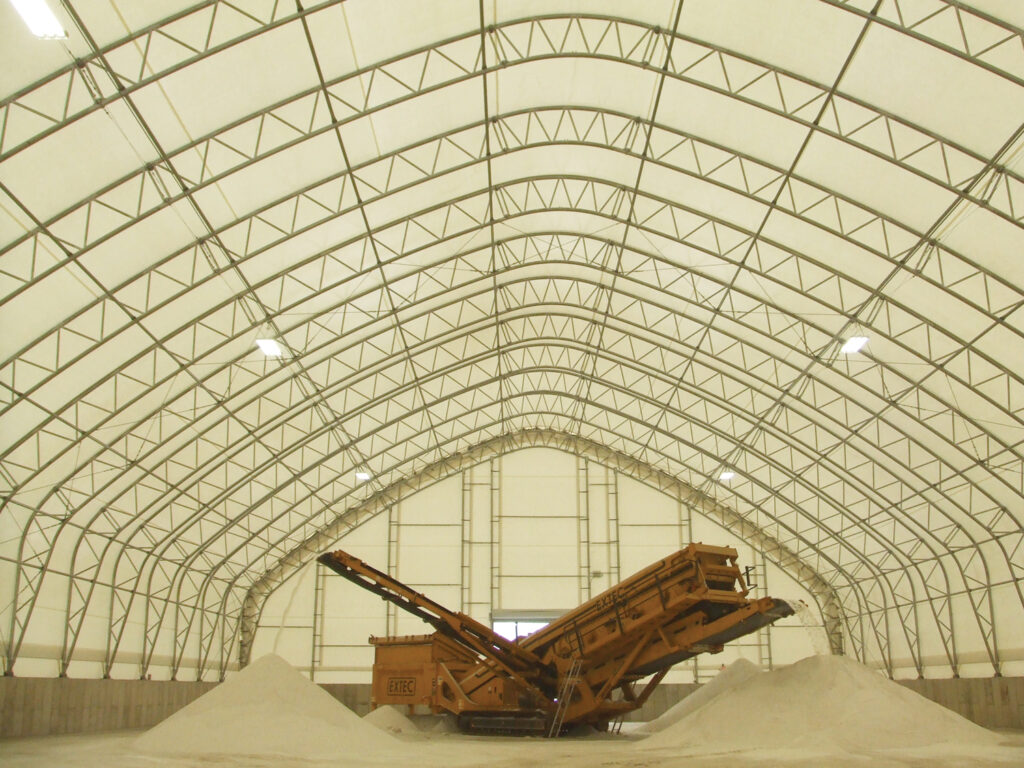
Fabric buildings can be designed to provide natural ventilation, which helps prevent moisture and condensation from affecting the quality of a salt supply. In the absence of moisture, corrosive materials, like salt, have little effect, so quality air movement and ventilation are valuable traits for a salt shed to possess.
The covers are also climate-sensitive, which keeps the building’s interior up to 15-20 degrees cooler in the summer and up to 15-20 degrees warmer in the winter. This helps further improve the climate for stored salt and keeps workers in the salt shed comfortable.
SIGN UP FOR MORE INFORMATION NOW
ULTIMATE CONVENIENCE
In addition to being well protected, salt storage needs to have maximum accessibility for workers and vehicles who are responsible for transporting it. Fabric salt sheds provide a number of features that ensure municipalities can easily retrieve salt when they are rushing to beat a winter storm.
Fabric structures are designed to improve and simplify the process of loading salt spreaders and replenishing salt stocks. Salt sheds feature high clearances, so even large vehicles can fit into the opening, and workers don’t need to worry about the structure interfering with their ability to load salt spreaders.
The buildings feature no internal support posts, meaning there is nothing to hinder workflow, vehicles or the amount of available space. For operations in need of additional room, they can build their salt shed on a pony wall, which increases the height and sidewall clearance without affecting the structural integrity.
Operations also benefit from the simpler installation process of fabric buildings. The salt sheds are shipped to sites in pre-built parts, meaning they can be erected in a much shorter amount of time than other buildings. Quick construction timelines keep operations moving and offer a valuable solution to those in need of a quick building before the snowy season hits.
ARE THERE ANY INNOVATIVE DESIGNS FOR SALT STORAGE BUILDINGS?
Today’s most effective salt sheds build on the core advantages of fabric structures, improving how salt piles are stored and handled on a daily basis. These structures are designed specifically for bulk material storage, so they provide the same spacious interiors and natural lighting operations rely on, but are constructed with the specific intention of improving accessibility and storage capacity.
Designs like ClearSpan’s Commodity HD and Single-Slope Buildings offer open, unobstructed access, allowing operators to quickly load and retrieve materials without interference. This layout makes it easier to store salt and other aggregates and can incorporate dividers to keep various materials organized within a single structure. The result is a more efficient workflow, especially during high-demand conditions when speed matters most.
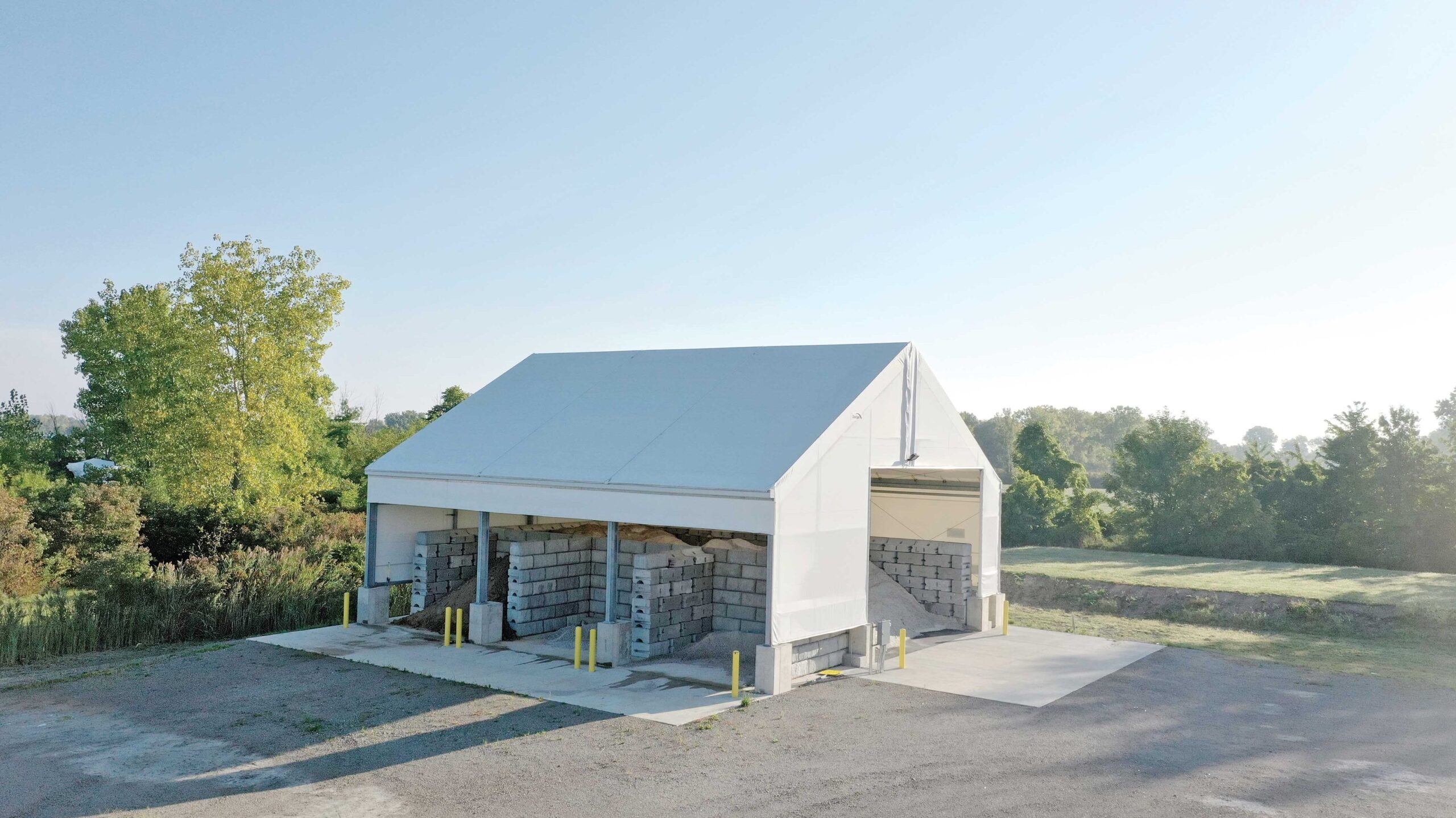
Another key innovation is the ability to customize openings across both sidewalls and end walls, creating unique, multi-bay storage configurations within a salt shed. In addition to several smaller sidewalls bays, like on ClearSpan’s Commodity HD Building, operations can also incorporate a larger end wall opening for bulk deliveries or high-volume storage. This type of layout further improves overall workflow, enabling crews to stage, store and deploy materials more efficiently, without needing multiple buildings.
Concrete bunker wall systems are becoming more common as well, where fabric (and even metal) structures are installed over precast containment walls or concrete blocks. With this approach, salt can be piled higher along the perimeter, maximizing storage volume without increasing the overall footprint. It also reinforces containment, supporting environmental protection goals by helping to prevent runoff and salt leaching.
While alternative designs like salt domes are still used in some applications, many modern operations are prioritizing solutions that combine durability with faster installation, lower maintenance and greater flexibility. Fabric structures continue to stand out in this regard, offering a practical balance of performance and efficiency for municipalities managing large seasonal demands.
What this means for municipalities:
Innovative salt storage isn’t about choosing a single structure type; it’s about implementing a solution that improves access, organization and long-term durability. Designs that incorporate flexible layouts and corrosion-resistant materials, like multi-bay fabric structures with concrete containment, can significantly improve performance year after year.
SAFETY AND LONGEVITY THAT PREVENTS SALT LEACHING
When it comes to safety, ClearSpan buildings help municipalities ensure their workers and the surrounding environment are well-protected. With plentiful space and excellent visibility from natural light, workers have room to move around and can see everything that’s around them, including active machinery.
The weather-resistant covers not only keep the salt protected, but also prevent any impact on an operation’s surrounding environment. By keeping rain and snow out, salt sheds reduce the likelihood of salt leaching out of mixed piles and contaminating streams, wells or groundwater. This keeps the local community from being affected and ensures operations are as safe as possible.
Due to salt sheds often being placed in harsh environments, fabric structures are designed to be installed in nearly any location. They are constructed using the highest-quality materials and manufacturing strategies, which helps them be so spacious and durable, even at scale. Their structural versatility allows them to be erected under difficult circumstances, like where ground conditions are poor, or space is limited.
Most buildings must meet local snow and wind loads to be constructed, and fabric structures are no different. Salt sheds can be engineered to stand up to even the most extreme weather, including wind loads of up to 185 mph and snow loads of up to 100 lbs. Upon request, the buildings can also include stamped engineered drawings to ensure the building’s structural integrity.
ClearSpan salt sheds come with industry leading warranties of 20 years for fabric covers and 50 years for framing. This guarantees operations that their structure will last decades without breaking down, in spite of corrosion or severe storms.
For municipalities looking at a new salt storage solution, a fabric building offers a number of advantages over typical salt sheds. Regardless of location or limited available space, operations should consider a fabric structure to keep their salt protected and ensure their community is always ready for dangerous winter conditions.
To start designing your operation’s new salt shed, call or Request a Quote today.